Showing posts with label Learning the Dungeon. Show all posts

Wednesday, March 9, 2016

Y'draneal's Maps

The fact that Y'draneal's player takes his role as the adventuring party's mapper seriously has actually driven some in-game plot developments in our Dwimmermount campaign.

In the rare session when he can't attend, the party is so dependent on his navigation that they are actually hesitant to explore too far without him.

Here's an only slightly blurry pic of some of his map work -- not too bad for a tabletop RPG novice!

Part of the Reliquary above with the Paths of Mavors below

Tuesday, September 22, 2015

Dwimmermount with Middle Schoolers - I

Following a character generation and general introduction session, this week in my after school games club 4 players (all 7th and 8th graders) began a serious exploration of Dwimmermount, James Maliszewski's megadungeon.


Never one to shy away from system heresy, I'm running it using 5th edition D&D, both to challenge myself to stay abreast of changes in the game and to help the players become familiar with a game that they can actually find being sold retail in our community (Pathfinder being the only other real choice in that department).


The lads (all four players are male) created what may have been the squishiest party I've ever seen, with two wizards and two rogues / thieves with nobody wearing any protection better than plain old leather armor, except for the fact that, as a sort of afterthought, they hired a pair of mail-clad mercenaries from the nearby fastness of Muntburg.

Our explorers:


  • Grim, a former soldier of the Muntburg garrison who was branded for thieving (we don't yet know if he is innocent or not) and who is persona non grata around the fortress.  Grim offered to act as a guide, steering the party to the foot of the haunted mountain.


  • Haka, a socially off-putting wizard who is obsessed with walking in the legendary footsteps of Turms Termax.


  • Vale, a persuasive female adept of the magical arts.  Over the last few weeks she has had strange, vivid dreams of the mountain and powerful minds waking and stirring in the depths.


  • Y'draneal, an elf who sees in the long-sealed fortress of Dwimmermount the chance to pull off the largest burglary job in memory.  As the group's only demi-human he does what he can to keep his race concealed, though he is sometimes betrayed by the cinnamon-like odor he emits.


Joined by two sell-swords (Ivar and Hethla) and having failed to convince the castle bailiff to part with any of his prized mastiffs, the small band was met in the gateway of Muntburg by Faure, an apprentice of Jasper, a sage of the nearby city-state of Adamas.  It has come to Jasper's ears that there has been an increase in the activity around Dwimmermount and, should anyone manage to find a way to breech the long-sealed halls, he would be willing to pay well for accurate maps.  The party rebuffed this offer vigorously, fearing that somehow they were being played, but after taking their leave Y'draneal hastily made his way back to Faure's side and secured the name of the street wherein he might find the sage.


Passing the Red Doors of Dwimmermount's first level with surprising ease, the party seemed quite interested in interacting with the various statues they found, going so far as to look for levers or ancient inscriptions.

Soon, however, the party seemed to fall victim to the same odd, lemming-like spirit that I've seen strike many dungeon delvers of their age ... despite a few suggestions that it might not be a wise course, they split the party ... then spit it again.

art  by Chad Thorson
Now Y'draneal may have had some reason to strike out on his own ... the party's light spell was spoiling the darkvision which he was in no hurry to admit possessing, and he was intent on mapping (something that the others didn't seem interested in bothering with).

On the other hand, Haka and Grim seemed propelled forward by a mix of greed and the need to be the first to find the next thing of interest.  Their headlong exploration soon led them into contact with some kind of porcine beastmen wearing the remnants of ancient Thulian armor.


A Charm spell on the foremost creature forestalled immediate combat, but the session ended with the pair dashing back up the long hallway with a whole pack of the brutes at their heels.

As a DM, this left me pondering once again what impels such blind recklessness among my players.

I think that electronic games are probably a contributing factor.


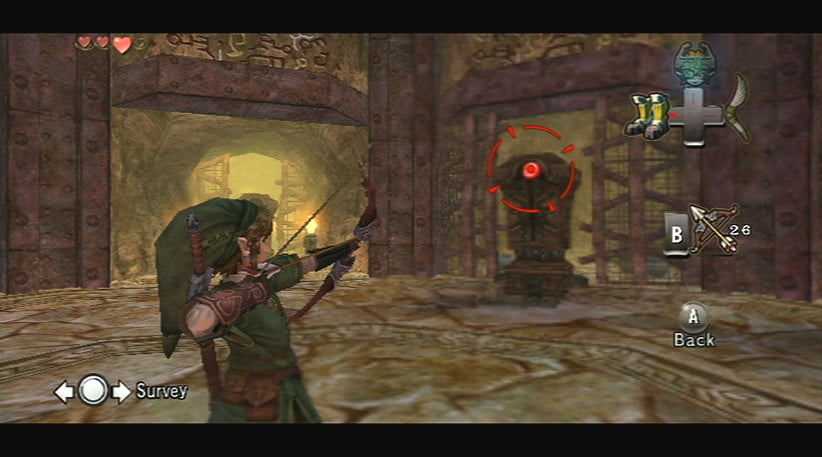
Earlier in the week I played Legend of Zelda: The Twilight Princess with my younger daughter.  The design of the game, which is heavily focused on both dungeon exploration and combat, pushes the player to rapidly expand her map of explored areas.

In fact, in Zelda, the newly discovered door or passage is nearly always the right way to go.  Rational, efficient game play includes dashing into unexplored areas with the greatest speed possible.  Death isn't really an obstacle because of Link plunges to his doom down some chasm you just restart (with all the same equipment), having only lost a little progress.

What makes perfect sense on a console platform, however, is a recipe for failure and frustration in a classic table-top game.

I'll be interested in seeing if I can shift these young lads to different mode of play.

Wednesday, August 26, 2015

Newbie DM Sound Off

Though my Strategy Games Class is on ice for now, here are some notes from three brand new DMs reflecting on their first few sessions running a stripped-down version of Dungeons & Dragons 5th edition:

Carl: "I think the best part about being a DM is how you have to creatively develop a plot and dialog for your dungeon.  Being a DM isn't the easiest though.  You usually have to deal with player complaints.  Also, it isn't the easiest to come up with concepts for rooms and how they influence other rooms."


Dallas: "The best part of being a DM was that you got to create a story while someone changes it with you.  I find the hardest part of being a DM is trying to keep [players] engaged and focused on the campaign."


Eric: "The best part of DMing is the amount of creativity you can put into the rooms.  It's actually quite difficult to try to stay quite balanced while having fun too, because you want all the players active."

Pretty cool insights.  Later I'll share some reflections from the players' side of things as well.

Sunday, August 16, 2015

Why RPGs Work So Well for Students

Recently, gearing up for the coming school year, I read Michael Reichert and Richard Hawley's Reaching Boys Teaching Boys: Strategies That Work -- and Why (Jossey-Bass 2010).

Reichert and Hawley surveyed more than 1,500 boys and 1,000 teachers across four continents, posing two challenges:


For teachers: "YOUR TASK: to narrate clearly and objectively an instructional activity that is especially, perhaps unusually effective in heightening boys' learning."

For students: "In the box below, tell us a story of a class experience that stands out as being especially memorable for you."

What they found will come as no surprise to any life-long gamer:

"In no other area of this study was there a stronger concordance between boys and teachers than in their agreement about the power of games to bring new energy and interest to the classroom." 
(Reichert and Hawley 58)

And for gamers who, like me, have been bitten by the role-playing bug, this next quote will certainly ring true:

"Many teachers found that requiring boys to take a role -- whether an impersonation or as part of a purely physical process -- was transitive to a deeper, surer understanding of the material under study.  In many cases too, the requirement to perform before others contributed to the student's sense of responsibility for the ultimate mastery of an assigned task." (Reichert and Hawley 85)


One possible implication?

If you place a student in the role of a wizard who must solve a two-step equation to unlock the sealed door before the ghouls can eat the explorers then he is far more likely to learn and retain the mathematical concepts.


"Teachers in boys' schools are quick to assert that boys together are quick and often eager to suspend belief and imaginatively assume roles ... The boys in this study strongly affirmed the pleasure -- and the resulting learning -- of being asked to get out of their familiar skin." (Reichert and Hawley 101)

Students adopting other roles intuitively and with ease.  My experience introducing a few hundred kids to tabletop role-playing has certainly affirmed this.  I never recall having to explain what was meant by "playing a character" ... suggesting that all of the "What is Role-playing?" introductions written in the vast majority of published rules amount to wasted ink.  Kids already know, and they like it.

Here's a cool quote for the OSR (Old School Renaissance) crowd:

"Across disciplines, teachers noted the energizing effects of setting boys to tasks for which successful resolution was perhaps possible but by no means certain--or easy." (Reichert and Hawley 111)

In other words, the possibility of dismal failure is part of what makes an activity engaging.  If the characters will automatically move through three, pre-planned encounters followed by a carefully balanced boss-fight, though it is a trope common to console gaming, that's actually less energizing to many young people then the possibility of getting squashed by a trap two rooms into the dungeon.


MMORPGs tap into this very nicely -- follow the quest if you want, but you never know when "KilB1zz666" is going to come dashing in and shoot your character in the head / knock down your building project for no particular reason.  In that format the other players take the role occupied by wandering monsters in D&D.


Finally, the themes found in most role-playing games (monsters, madness, mutations, etc) align beautifully with what interests young brains.

"Perhaps unsurprisingly, teachers in all disciplines noted--and to an extent were willing to indulge--their boys' fascination with (sometimes literally) volatile material ... [this] suggests the transivity of providing students with a safe brush with danger." (Reichert and Hawley 172)

So games, in particular role-playing games, have a direct line to student engagement, interest, and learning.

This shifts the question to:

"How can I effectively incorporate RPGs and role-playing elements into regular instruction to enhance student learning?" 

Sunday, March 22, 2015

Some Wisdom from the Mouths of Babes

Okay gang, here's some wisdom on how to handle dungeon encounters straight from the mouths of some of my elementary school players:


GM (me): "What do you do if you have an encounter with a creature down in the dungeon?"

R: "With what?"

GM: "You know, with a monster of some kind."

R: "I don't know ... you normally 
try to talk to it, run away, or fight."

GM: "And if you try to talk to it, what are your choices?"

R: "You um trick, or like act like you are better than them, or you try to bargain with them or something."

L: "You can either negotiate, trick, or intimidate it."

R: "I didn't know all the words for it but that's what I meant."

GM: "What are some basic tricks you can try to pull?"
No bluffing here

R: "If you are in the right situation you can pretend you are one of them, or you can pretend that there is something big and bad and scary that they are afraid of right behind them or something."


I thought that was a pretty decent way to sum up the basics of how to handle most types of encounters!

This left me reflecting a bit: in both my in-school Adventure Games class and my weekly after-school club, skilled and confident GMs are the most scarce resource.  For this reason, I'm always on the lookout for board games that can either help develop GMs or simulate the presence of a skilled GM at the table.

Most dungeon exploration board games seem to focus on movement and combat, but leave out the entire communication aspect of gaming (whether that be bluffing, intimidation, bribery, trading, or offering an alliance).


Does anybody know of a board game that simulates that aspect of adventuring along with tactical maneuvering and combat? 

Saturday, January 31, 2015

Learning the Dungeon: 7 Assumptions

I'm starting a new nine-week term with my in-school Adventure Games Enrichment Class and I'm thinking of new ways to engage my students in the learning-rich treasure trove offered by tabletop role-playing.


By far the largest obstacle to my efforts hasn't been getting buy-in from students or articulating the educational value of the activity to my administrators (who have been very supportive) but rather in the fact that tabletop role-playing as a medium starts to lose something with groups larger than 6-8 players.  Oh, it's possible to run stream-lined games for groups of 25 (which I've done) but at those scales the game world the golden element of intense, personal interactivity with the shared world.  Also, let's face it, for an X-box generation, waiting more than four minutes for your turn is going to be a real challenge. 

Simply put: Skilled GMs are my most scarce resource.

Fortunately, this go-round I have a great mix of students who range from grizzled veterans (who've campaigned through both my afterschool and summer gaming classes) to complete newcomers who've never held a d20 before.  With some fairly experienced players in the room we should be able to break into groups earlier than in any prior class.


To pave the way for developing GMs, and to capitalize on some of the academic potential of tabletop gaming, I intend to start each class out with a short writing prompt.

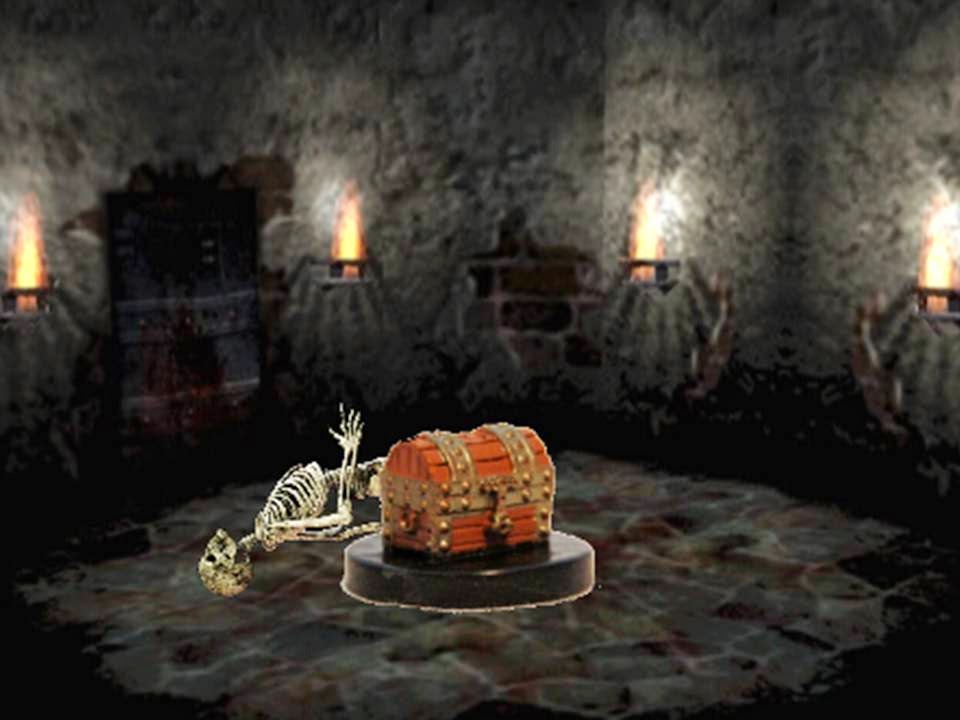
Example: What are at least four things you should probably do before you try to open this chest?


To help kids who don't have any prior experience approach these questions, I introduce the following list of Assumptions:

1. We are using a generic "swords and sorcery" setting with medieval technology (no guns, flashlights, cell phones, dynamite or electricity).

2. Adventurers explore and search for treasure.

3. "Dungeon" is a generic term for a dangerous, unexplored, sub-surface environment.

4. Dungeons contain traps, monsters, and treasure.

5. While not all "monsters" are immediately hostile, and some are actually friendly, combats are frequent and can be deadly.

6. Some creatures encountered will be far too strong to defeat in a fair fight (you have to know when to run).

7. Adventurers must work as a team to survive.

Am I leaving out anything critical?
Should I add something about each character being a specialist in his or her chosen profession?

Tuesday, July 22, 2014

The Forbidden City: An Adventure Log - Part III

After a brief rest at The Century Tree, Hale the Elf was joined by two dwarves and a wizard.  The group headed for The Plaza of the Sun to investigate the shimmering magical effect that had been spotted there prior, but not long after setting out they encountered several giant bees.  One huge bee alighted upon a dwarf's helm.  The expressions and voices at the table couldn't possibly have been much different if the bee was real and not just imaginary:
photo from this site
"We should run!"

"Hit it!"

"No!  No, hold still ... don't move."

"Just. Don't. Panic."

"Okay, I stand still."

GM: "The bee probes the edge of your helm, its wings still beating.  You can hear its chitinous legs scratching against the steel."

"I just stand there."

"Cast a Sleep Spell!"

"Yeah, okay.  I cast Sleep."

As the wizard invoked his spell, the bees quieted and grew still and the dwarf slumped to the ground.  The explorers flirted with the idea of trying to dispatch the giant insects, but in the end decided that the risk of waking them was too great and so collected the recumbent dwarf and made a hasty retreat.

pic from JuJuBeeHoney.com

At The Plaza of the Sun the group's wizard was partially roasted after investigating a huge mosaic sigil, but gained a new spell in the balance, so despite the blisters and lack of eyebrows he considered it a gain.

After a brief round of hide-and-seek with some well-camouflaged mongrelmen, the group made their way to the massive bronze sandals of The Fallen Colossus.  This location has attracted more attention from my student players that most features of Bawal Bayan.  Perhaps it is because the massive feet pose unspoken questions: What did the Colossus look like before it fell?  What did it signify that was worth such a massive undertaking?  Was the metal giant of any practical use, or did it just stand there?  

about 100% chance that I was influenced by this ...
Tapping revealed that each huge foot made a slightly different tone.  The dwarves were hoisted up for a look, and sure enough, one disembodied foot was filled with jade-green water whereas the other was both hollow and empty, drained by a silt-clogged grating beneath the giant heel.  After some rearranging, the dwarves set to work dredging the water-filled foot with a grappling hook, hoping to snare something shiny.  Meanwhile Hale and the wizard dropped down into the other foot to investigate.

"No!  Okay now you guys are stuck and if you need help we can't reach you -- we're both dwarves."

"Oh well."

"Can't you just climb up a rope or something and help us?"

"Yeah, just use your grappling hook."

"Well, we're busy over here."

Ducking low to explore the shadowy recesses of the Colossus's toes, Hale made a discovery: a little, wrinkled man sat cross-legged upon the sand, his long earlobes almost touching the tops of his skinny shoulders.  To either side of him sat a small, wooden box.

"Hello?"

GM: "Onlee-wun."

"What?"

GM: "Onlee-wun."

"Oh!  You have to pick one of the boxes."

"You should just stab him and take them both."

"No, I bet he'll go all ninja-master on you if you do.  He'll run along the wall and be like, 'Waaaa!' and chop your head off."

"Okay.  Which one should I pick?"

"Pick the left one -- always pick the left one."


Hale smiled nervously as he stepped forward and selected the left-hand box.  It opened to reveal a fist-sized glass globe in which a silvery-green leaf was suspended.

"Cool."

Having searched a bit more, the wizard called for the dwarves to help him out of the huge bronze foot.  Meanwhile the pair had gotten into a tussle with a green slime, but had resolved things and cast their still-dripping hook across to the neighboring foot.  A quick swing later and they adjusted their hook before dangling the rope down for Hale and the wizard to climb.  The wizard clambered up but, even as he tried to follow, Hale found himself shrinking -- his hands growing so small that he couldn't easily grasp the rope.

"Dude, you are shrinking!"

"I know, help me up!"

[GM whispers something to Hale's player]

"Only one."

"What?"

"He's turning into the little man!"

"Only one."

"Your stuck in there forever man."

"Only one. Only one."

"I'm not going back in there."

"Only one."

With a sigh, Hale soon resigned himself to a life spent squatting within the dim confines of the huge, hollow foot and he went to sit in the shade.  Then one of the dwarves spoke up ...

.

"Wait, I haven't picked one yet and I didn't come in with you guys."

"Only one."

"I'm going to climb down and go pick the right one this time."

As Hale looked on, the dwarf flipped open the right-hand box and plucked out the small, crystalline spider nestled inside.  He admired it briefly before stashing it in his pack and climbing back out of the foot.

"Only one."

The wizard was suddenly uncertain.

"I haven't picked one yet either ..."

"Only one."

"Yeah, you should go."

"Um ... okay."

"Only one! Only one!"

He returned to the toes where Hale sat and, after repeated urgings, chose the left-hand box, which again contained the silvery-green leaf suspended in glass.  Hale disappeared in a wink and found himself lying on the stony ground between the feet of the Colossus.  Inside the foot, the wizard had already begun to shrink, his features shifting.

"Are you guys going to ... I mean ... Only one?  Guys?  Guys?"

"I'm not going back in there."

"Nope, not me."

With little more than a shrug, the remaining explorers retreated, climbing out of the crater and leaving the wizard to contemplate his fate.

Egypt Egyptian  - The Sphinx - art
photo access at cultured.com

As our week drew to a close, Hale would return to The Forbidden City one more time with several other companions, this time making for the cobra-hooded Sphinx that dominated the southeastern corner of the crater.  He kept a diligent lookout during the difficult fording of stream in which one dwarf was nearly swept away, and led the way as the group skirted The Temple Plaza (where earlier explorers had interrupted a dreadful Yuan-Ti ritual).
  
Following the edge of some ancient, half-clogged canals, blind luck brought Hale and the others to precisely the same crumbling house where Victoria the Dwarf finally brought the rogue wizard to bay and slew the blackguard months before.  Poking around, the dwarf and a knight found the wizard's old escape tunnel ... a mere earthen crawlspace and started to scout it, but Hale and the other elf who had joined them were eager to arrive at the Sphinx and so, once the knight was tugged free from where he had gotten stuck, the group pressed onward.  Had they but known, another couple yards along the crawlspace they would have come across a lumpish obstruction ... an entire sack of treasure that Victoria had been forced to leave behind before making her daring, solo escape from the ruined city.


Hale and the others arrived at the Sphinx and, thanks to the help of the astute dwarf, found the secret door that let them descend into the chambers below.  Those halls contained a weird, fun house dungeon of the classic style, complete with revolving corridors, talking stone faces, gruesome traps, and giant swinging platforms.  

After another elf fell to a trap, the three survivors realized that it was time to have a serious conversation about whether to head back across the ruined city and the safety of camp or explore still deeper ... with the week of camp wrapping up, if they wanted any chance of being able to make it out of the jungle and back to their waiting ships [where the gold they had won in their adventures would be added to their team totals to determine the winning team of the week-long tournament] they would have to depart right at that moment.

They put it to a vote ... and all three voted to stay in the dungeon beneath The Forbidden City, sacrificing their chances of escape and their chances to influence the outcome of the broader competition, just in order to explore just a few more rooms ... to look behind one more door ... to navigate past one more trap ...


And there you have.  These last three posts make up the entire known adventuring career of Hale the Elf and represent one young person's introduction to that weird, fringe hobby that is tabletop role-playing.  Though I sent him home with his first d20, a miniature, and a copy of Dagger for Kids, I don't know if Hale's player or any of his 15 peers will ever choose to play tabletop games again, or if this week will quickly be buried under other interests and opportunities.  

Still, it was a privilege and a joy to get to see faces light up each time they solved a puzzle and hear the collective groans from the table when each new challenge was presented ... really, it was the closest I think you can get to recapturing the wonder and thrill of opening those old boxed sets for the very first time, or marveling over the strange dice ("How many sides does it have?").

Who knows, maybe lightning will strike twice and, though I only had them for a week, one of these students will make a deeper connection with this odd little hobby that has done so much to shape the way that I think, learn, and communicate.