Friday, July 18, 2014

20 Hours of Dagger

This week, in Adventure Games Camp, I GMed over 20 hours of Dagger for Kids, running groups of four to six middle schoolers (each complete novices to tabletop RPGs) in  eight separate sessions.

Even as a veteran Game Master, this was a great workout for my skills and here are some basics tools and practices that I found to be critical in order to make it work smoothly:

  • Players pick a miniature to represent their character before taking any other steps.  
This immediately accomplished at least three things: 

  1. as kids looked over the selection of models it communicated the swords-and-sorcery genre of the game without the need for any exposition; 
  2. it allowed us to immediately identify which of the four character class templates that student would be playing [knight, elf, dwarf, or wizard]; 
  3. Toysmith Guardian Knights Action Figure, 36-Piece
    Thirty-six 48mm minis for about $6
    on amazon
  4. it engaged the kids creatively in thinking about the capabilities and potential adventures of their chosen explorer while simultaneously creating psychological distance from the in-game character.


  • Use pre-generated, pre-printed, rules-lite character sheets.  
Dagger for Kids is so free of crunch that each character essentially has only three stats: Armor Class, Hit Points, and Saving Throw.  Each of these stats, along with starting equipment, was predetermined (and pre-printed) based the character class each student chose.  What we lost in customization, we more than made up for in actual game play.  We were up and running in about four minutes.


  • Include a section for character portrait or symbol on each character sheet, but don't require its use.  
Some kids eagerly dove into using this space, others doodled in it during play, and still others never touched it.  This little feature helped some students remain focused, helped others get excited and better visualize their characters, and helped me sort 16 character sheets more rapidly.


  • Spend minimal time on the rules before beginning play.  
I mean minimal.  In fact, my introduction to the rules went something like this, "Your Armor Class is how difficult it is to hit your character hard enough to hurt him.  Your Hit Points are your life or health.  When they are all gone your character may die." Done.  I' saved other things, like saving throws, listening, and opening stuck doors for when those situations arose during play.  I didn't explain that high rolls on a d20 are better than low rolls, they just seemed to get it intuitively.


  • Use a broad theme and an engaging graphic to create setting.  
"You guys are explorers who have cut your way through the jungle to Bawal Bayan, The Forbidden City.  Situated down in crater are the ruins of an ancient, lost city.  There is an incredible amount of treasure hidden down there somewhere, but it is also incredibly dangerous because of traps and the strange creatures that haunt the ruins.  Your goal is to find a way down into the city, find as much treasure as you can, and return to The Stockade, your basecamp.  Only treasure that you bring back to the basecamp counts."  


While giving this bit of exposition (four times in two days!) I would lay out the Bawal Bayan poster map in front of the players for them to study.  The rim's-edge, isometric view of the adventure area (an idea I totally cribbed from I1, Dwellers of the Forbidden City) basically allowed the players to preview the "dungeon" and start making choices right away.  


Since I started using this map back in the spring, I've kicked myself for all those years in which I held back on the visual information, insisting that players discover things as they go.  What was the best part of playing Ravenloft when we were kids?  The isometric map by David C. Sutherland III of course!  

Castle Ravenloft from the classic 1983 AD&D module
The shame was that the DM got to keep that crazy map largely to himself.  If I got to do it over again, I'd find some way to justify in-game (however hackneyed) of putting that map directly in the hands of the players.  What could be more engaging?!

  • Deal with starting equipment and encumbrance by using an intuitive, minimalist approach.
Each character sheet had six blanks for equipment.  Most of these were pre-filled based on character class (e.g. "plate armor, shield, sword, torch" for a knight).  Kids could fill empty blanks with anything they might reasonably get from The Stockade.


  • Start the action with a meaningful in-character choice.
"Last year, before the monsoon rains began, several groups were able to get in and out of the crater through The Black Canyon.  It was very dangerous and was defended by monsters.  There's The Fool's Stair, a steep slope that you could try to descend, but there are frequent avalanches there.  Or you could try to climb down The Century Tree.  Nobody has done it yet, but it might be possible.  Finally, some people have said that there is a secret way down behind The Waterfall, but that may just be a rumor.  Which way do you want to try?"  
This got the kids working as a team and making meaningful decisions right away.

  • Use dice to represent options, track voting and to break tie votes.
It is surprisingly difficult for middle school students to arrive at consensus.  


An illustration: Finding themselves in a fun-house dungeon under The Sphynx, Student Ernie [not his actual name], argued loudly and passionately that the group should once more activate the rotating room (inspired in no small part by the now defunct Time Shaft from Kings Dominion) to reveal a new passageway and press on to explore farther instead of returning to the surface.  When the team finally consented to this course, and the spinning room revealed an empty tunnel with a right-hand turn at the end, Ernie immediately (and loudly) began advocating a return to the surface.

Rockin out in Kings Domion's Timeshaft c.1979 !!

Given how firmly their opinions are held and how fast they change (often switching sides two or more times mid-argument), middle school kids sometimes lose track of what the options being discussed actually are.  I found that, after letting them go for a few minutes, restating each broad position while placing a die on the table to represent that choice somehow helped them reach decisions more readily.  
"Who wants to go left?" [placing a die on the table and turning it to show the number of votes for that choice].  
"Who wants to go right?" [same process with a second die].


  • Encourage the players to avoid splitting the party.
Just break the scene and go metagame, explaining that there will be longer wait times as you GM the other half of the group.  Add mention of the fact that the setting is really challenging and that one or two characters on their own stand little chance of survival.  If they still insist, let them go.  Don't stack the deck against them, but pull no punches.  If they wander into the middle of the Bullywug territory and you know the tribe has about 60 members, go ahead and roll that d20 to see how many the lone character stumbles upon.
sweet Bullywug pic from TSR's Fiend Folio
  • Forbid player-vs-player combat.
Generally speaking, middle schoolers take everything personally.  Any inconvenience may be taken as a personal affront, and any rule may be interpreted as a commentary on their moral character and judgement!  With that being said, the kind of degenerative grudges that can quickly develop when there is in-character fighting within a group have no place in a classroom.  I just break scene, put on my dictator hat, and say, "No.  You can't fight another player character in-game."


  • Throw them a basic (but avoidable) combat encounter early on.
Whether a carnivorous ape, a giant ant, or a crocodile, some type of critter (usually a lone specimen) needs to appear in the first ten minutes of play to help establish the tone, provide an opportunity for a small victory, and give the group practice making high-stakes choices early on.  With a high lethality, Edgar Rice Burroughs inspired setting, all combat encounters should be preceded by at least one sign that a potentially deadly confrontation is about to take place.  If the characters run, they escape unharmed.  If they hesitate or weigh the risks and decide on confrontation then let the dice fall where they may.

  • Print rules for searching and listening directly on the character sheet.
Go ahead and put any frequently used subsystems right on the character sheet.  Little touches like that really smooth out the play experience and protect immersion.

  • Be blunt about the fact that undue delays or more than two or three search checks in the same area will introduce the possibility of a wandering monster.
It's okay to get a bit meta-game to reinforce the idea that this is an adventure game.  By role-playing we are helping young people practice exercising reasonable caution balanced with calculated risk ... the kind of thinking that they will need when they start driving for instance.


  • Be liberal and flexible with spell effects, rewarding almost any innovation.

"Can I set fire to the bushes with my Magic Missile?"
"I know he doesn't have any hit points left, but if I cast Cure Wounds on him will it still work?"
"Can I get all of them with my Sleep Spell?"
"Will my Cure Wounds spell work on poison?"
The answer to every one of these questions was, "You can try it out if you want to," but the ruling in every case was affirmative.

  • On return trips, fast forward through safe / known areas to start characters on the edge of danger / the unknown. 

"The white apes have been driven away from the north rim and controlled brush fires have been used to wipe out most of the giant ants.  Another group raided the tree-platforms in The Century Tree, defeating those little, green-skinned creatures.  The surviving "gremlins" have withdrawn far up into the very top of the tree and the explorers have taken over their village to use as a safe place to rest and re-equip.  Ropes have been lowered to the floor of the crater from there.  Do you want to start at the foot of The Century Tree?"

  • Use graphics whenever possible.
I'm a pretty fast sketch artist and I can generate a rough image of whatever I want in under a minute, adding details as the players debate or take action (this also gives kids awaiting their turn something to watch).  Nevertheless, I'm not above using graphics I find online, pictures in books, or artwork prepared in advance to help with engagement and immersion.  Whenever a new picture is generated the kids tend to lean in close and get really excited ... triggering a new sketch becomes a pavlovian reward for exploring deeper into the unknown.


  • Keep a folder of stock encounter areas (mini-dungeons) that can be dropped in anywhere.
If I had created Bawal Bayan as a kid, I would have gone through sheet after sheet of notebook paper, carefully numbering and stocking each of the twenty-odd encounter areas of the Forbidden City.  Most areas would have had maps of their own, with twenty or so numbered areas, resulting in something like 400 encounters, spread over about 30 pages of notes.  Then I would build a custom wandering monsters table, perhaps several, designed to showcase certain creatures and establish the regional theme of the adventure.  Many contented hours would be passed on this work before I was ready to unleash my creation upon my hapless friends.

As an adult with thirty years of RPG gaming behind me? 

Not-so-much.  

My materials this week consisted of one index card upon which I had listed common wandering monsters (I never referred to it) and half-a-dozen manila folders upon which I had sketched 12-room mini-dungeons, adding a few notes in the margins.  

In over 20 hours of play I reached for these exactly twice!  These tools are no substitute for intuition and experience, but are nice to fall back upon in the rare, "dry" moment.


  • Maintain continuity to render a dynamic setting.
My summer camp explorers kept finding signs (and remains) left behind by my school year groups.  Bawal Bayan didn't "reset" for this group -- the rogue wizard was still dead, the once-neutral mongrelmen were still hostile (owing their treatment by earlier groups back in the spring), and the massive carcass of the ankheg still dominated the side chamber of The Black Canyon.  

Likewise, as I ran eight separate sessions this week, every group's actions added another layer to the setting.  The pygmies were content to let subsequent travelers pass after a somewhat grisly exchange of goods.  The tasloi "gremlins" were cowed and withdrew into hiding after the death of their shaman, opening up The Century Tree as a the new, preferred way to enter the crater.  Likewise, the desecration of the Yuan-Ti's rite in The Temple Plaza saw them withdraw to plot terrible vengeance upon the next group of explorers to dare The Forbidden City.

Some of the players recognized this and went out of their way to find or acknowledge the marks made by their peers in earlier sessions.  One young man borrowed a film reference and started calling these situations "cameos".  Nice.

I knew my players would talk between sessions, describing excitedly to other groups what new areas they explored, where the traps were, and what kind of creature ate them.  A couple clever young fellows even visited this site to read up on Bawal Bayan and see what sort of info they could gather that might help them find more loot [shout out to M, J, & T].  Rather than resist the metagame, I chose to ride the wave and make the setting respond to the movements and choices of the players.  This both breathes more life into The Forbidden City and provides me with more raw material as I run encounters.

So, looking back over the list, I'd have to say that there's nothing particularly innovative here, and these practices aren't necessarily transferable to other campaigns, systems, and age-groups of players, but neither does this advice appear in those ubiquitous pages "Advice for New GMs" found in just about every copy of every role-playing rules set on the planet.

Monday, July 14, 2014

The Best Part of My Day ...

... was when the knight and the wizard got dragged down into the giant ant nest, still alive and kicking.

Yes ... that's actually Joan Collins in
Empire of the Ants (1977).  Can you believe it?


Today was the first of my (8) day-long summer school sessions and, with the help of some incredibly competent, generous, and just downright cool high school kids (former students), we brought six and a half straight hours of gaming Geekiness to 16 middle school kids.

By my count, today we played:
  • two games of Catan
  • one game of Citadels (Fantasy Flight)
  • two games of Pirate's Cove
  • Risk
  • one chess match
  • one game of Stratego
  • two games of Robo Rally (one was an elimination death-match)
  • two sessions of Dagger for Kids (RPG)
  • nine turns of Ghult: Coast of Blood (our homebrew scaffold game)

When polled at the end of the day, every kid said that they had a good time and all but two responded that they played a new game for the first time today (apparently they didn't count Ghult, else it would have been all 16).

... but seriously, the best part?  When they split the party (for the second time) and got dragged off by giant ants.  Just classic.

Sunday, July 13, 2014

My DM is a Seven-Year-Old

Today we took a short break from our Homeguard B/X D&D campaign for a one-shot run by my seven-year-old.


As we finished making our four level-two characters (the elf, dwarf, fighter, and cleric each fit on the front of a separate index card) our intro was a railroad worthy of a Ravenloft module: "Many people have been going in.  You are always looking for danger. In the old building and the rumor is that The Beast's pet lives below.  You guys are really eager to find it ... whatever the pet is ... and The Beast!"

All aboard the plot train!
Okay, I can get into this ... we're doing Brotherhood of the Wolf, but directed by a seven-year-old.

"This button hurts my nose."
We got a bit more exposition as the first few tiles were laid out: "It's in the side of a hill.  This cave is under a hill.  There are trees leaning over it and down here [west of the dungeon mouth] you see where some adventurers may have packed; set their stuff before they went in.  There's a horse tied to a tree."

We took a little time to scout this camp and noticed that there were four bedrolls.  Keeping a sharp eye out, we met a halfling lookout standing watch nearby.  We hailed her and learned that she was called, "Sweets".  Wary of treachery (don't laugh, kids can be devious), we still agreed to go into the dungeon with Sweets to meet up with the rest of her group.  Once inside, we followed the halfling's lead to circumvent a trap (pressure plate on the floor) and a tempting red lever in order to meet up with the rest of her party. 

Following Sweets

Eleanor the Elf and an unnamed dwarf indicated that they too were investigating rumors of The Beast and that "Our party has been down here before."  

"Hey, there were four bedrolls outside at the camp, but only three of you, so ... ?"

"Our fighter was swallowed up by a giant -- well, he's a troll or an ogre or something like that.  We're going back in to find its pet".

Cool.  Though still not completely sure we could trust them, we joined up with these guys on the basis that we could use some meatshields, especially if there really was a troll around.  Then came a bit more spontaneous exposition: 

"This building used to be a church but the forest over grew and the new town was built far, far away from here.  Monsters came in.  They left [ the church] behind.  That's why outside you can still see bricks poking up through the grass."

Cool.  We now had a bit of setting.

Despite comments from the newly-met NPCs that they had already cleared most of the half-dozen rooms near the dungeon's entrance, we set about methodically checking rooms so as to avoid leaving monsters behind us that might cut off our inevitable, panicked retreat.  Behind the back wall of a small, bone-strewn tomb, we heard a munching sound.  Judging the situation shrewdly, Kalarel the Younger, our cleric of questionable orthodoxy, used a rope to tug the tempting lever from the entry passage and, sure enough, the floor plate sprang up to expose a catapult-like spring trap while a secret panel rose, revealing a giant spider slurping on the remains of some hapless explorer.

Nothing could possibly go wrong ...
Some flaming oil quickly solved what could have been a deadly encounter (it was a "save vs poison or die" creature), we recovered some gold, haggled over the treasure with the NPC group, and then it was off to another room to tangle with a squad of five spear-chucking goblins. 

Though we took a couple wounds, the goblin's soon took enough casualties to surrender.  We placed one under a charm spell before disarming the rest and sending them packing.  

The ensorcelled goblin, who turned out to be surprisingly well spoken, was a wealth of information about the dungeon and The Beast: "I really would prefer it if you don't call him 'The Beast'.  He is a giant and his name is 'Gulln'."

"The goblin's are Gulln's servants -- they aren't his slaves, he doesn't hit them with a whip or anything -- they work for him and are his servants."

About that time Kalarel the Younger randomly revealed a personal detail: 

"I take a skull from every dungeon I visit as a souvenir."

"What if there isn't one?"

"I take a leg bone instead!"

Ah, kids.

Still under our spell, the goblin helped us avoid a nasty encounter with some semi-trained wolves and loot part of his master's treasury.

"These must be the Bea ... Gulln's pets, right?"  

"No, his pet lives down below."

"Oh."  
Smoked a spider and by-passing the wolves.
Notice the sweet index-card character sheets.

Following the goblin's lead we crept down a back stair and ... came face-to-face with the giant.  Hasty negotiation followed:

"Where are my other goblins?"

"We told them that they could take a break for a while."

"Why are you here?"

"We heard some guys talking in town, and they said that you didn't have any kind of pet and I said you did and they kept saying you didn't, so we came to prove them wrong."

"Nobody is allowed to see my pet slime beast!  If anyone tries to see him then I will turn the monster loose!"

Then Sweets revealed something we hadn't been told yet ... it seems that there was a big reward being offered to anyone who could discover the real name of the monster kept by The Beast.  Hmm ... wheels were beginning to turn ...

"Yeah, I knew you had a slime beast, that's just what I told those guys.  I said 'The great and mighty giant has a slime beast named Gulln'.  I knew I was right!"

"It's name is not Gulln.  My name is Gulln.  I don't like anyone saying my name."

"Oh, that's your name?  Then what's your pet's name?"

"I'm not going to tell you!"

Then Kalarel the Younger suddenly spoke up:

"I bet you don't even have a slime beast.  I bet you just made that up.  I bet you just have a worm back there.  Your pet isn't anything but a little worm."

"What?  You don't believe me?  Here!"

Kalarel was scooped up by the giant and carried off to the deepest part of the dungeon where, behind a heavy door, in a dark pool the slime beast howled and snarled.

"It has the voice of everyone it has ever eaten."

Creepy.

Kalarel was dumped there, I guess to be dealt with later, and Gulln returned to menace the rest of the party.  Left alone for the moment and thinking quickly, the cagey cleric became imperious with the gibbering slime beast:

"I am the great Kalarel!  Tell me your name or I will destroy you!"

"Scratcher."

Okay, wasn't expecting that.

While we keep Gulln talking ,
Kalarel tries to bluff "Scratcher" in the background.
As the rest of us tried to keep Gulln talking (and bemoaned the fact that he was way too tough to be laid low by our sleep spell), Kalarel came dashing back up the passage, whipped past us, and sprinted for the entrance to the dungeon.  We all took to our heels with Gulln in hot pursuit and, in a fleeting moment of brilliance, we remembered to hug the left hand wall on the way out.  The furious giant hit his own spring trap and was catapulted over our heads and down the valley to his doom.

So ... not too bad for a seven-year-old, but even better was the beauty of what I saw with my teacher-vision(TM).  Over the course of a couple hours this rising third-grader:
  • Stayed on task taking two breaks when needed and returning to the table (intellectual resilience)
  • With prompting, skimmed several paragraphs of informational text to check rules on morale and surprise
  • Created a hand drawn sketch of the dungeon and annotated it in advance with monsters, traps, and treasure (planning and synthesis)
  • Placed tiles to replicate the contours of the map and adapted when a perfect fit couldn't be found (spatial relationships)
  • Read three separate charts accurately
  • Used an index to find information four times
  • Played by the rules equitably, while still making rulings at appropriate times (e.g. the goblins made one morale check, but after taking more losses it was ruled that they surrendered without making the second check)
  • Used descriptive language and dialog to hold the attention of (older) peers and create a coherent narrative
  • Retained details and kept them consistent throughout play (names, characters, dungeon layout remained static)
  • Imagined the reactions and perspectives of dungeon inhabitants and had them respond appropriately (at one point we made a lot of noise and we heard creatures start howling, though we hadn't yet discovered that there were wolves in the dungeon)
  • Received feedback graciously after the game was over, even asking, "Okay, but what did you not like that I could make better or change in the game?"
Yeah, so that's a win.

Saturday, July 12, 2014

Olde School Wizardry: The Political Game

You've been to the Underdark, pounded a dragon or two, and slain more orcs than you can begin to count.  What's the next step?

Politics and realm management of course!  But how to do it?

Adventurer Conqueror King and Mentzer's 1984 D&D Companion Set  help address the establishment and management of a realm, but what about the politics of council meetings, trials, and court intrigue?  I really like the idea of these interactions, but I've never been that satisfied with how I've been able run them in actual play.  Too often the players are relegated to the role of mere spectators (passive or reactive) as the GM spins plates to make various NPCs showboat.

This week, in my Olde School Wizardry homebrew campaign for men with beards, I feel like I made some actual strides in improving my political game.

The main action of our last session revolved around a crisis at The Collegium Mysterium, the world's premier college of wizardry.  Arch Chancellor Weigman Pot and other key members of the college faculty and administration had gone missing, and the player characters met with eight other important wizards to decide what must be done (and how this turn of events might have bearing on their own agendas).

I use NPC cards, as much to help me keep our campaign's sixty or so non-player-characters straight as to help my players.  The cards are just 3x5 index cards with a black and white headshot and a name on the front. 

a young Hugh Laurie plays our Head Librarian,
the competent if somewhat unorthodox Mooly Klips

On the back I record alignment, accent/voice, and any factional affiliations, leaving space to jot down any stats I may need to generate during play.
  
I placed the cards for our eight key NPCs on the table and we opened with a brief line or two of dialogue from most of them (some directed to the PCs, some to each other) mainly to establish the tone.

Next I stuck a post it to each NPC's card, listing a few keywords relating to his position.
Then we broke scene and assigned each player character a number of influence points.  
  • Each PC received a base of five points, adjusted by his Charisma modifier.  
  • Each point of influence could be spent on the various issues being debated at the meeting, either openly (by making speeches and addressing the room at large) or secretly (reflecting whispered sidebars and one-on-one dialogues).
  • Players could earn additional points during play by openly presenting particularly reasonable, clear, or compelling arguments.  The advantages of spending points in secret were that it permitted for bluffing and could help the characters avoid the in-game consequences of publicly opposing a senior wizard.
  • NPCs also received an allotment of influence points, based on Charisma and their positions (in this case between four and ten points), but these numbers were not shared with the players.


I listed the four core issues being debated, writing each out as a yes or no proposition (e.g. "We should contact the Estates Arcanum and make them aware of the present crisis." or "We should dispatch an official complaint to the Bhatvian Embassy and demand their full cooperation in the recovery of our personnel.").

We then went around the table and each PC and NPC were able to make statements, allocating as many of their influence points as they wished to play openly.  Free-form dialogue followed and, in a final round, PCs and NPCs were invited to role-play through any sidebar conversations to try and sway how other characters spent any secret influence.  Finally I tabulated the results and announced how the room found on each issue.

We found this to be a very satisfactory little subsystem and we'll likely use it again in the future.

.
  

Friday, July 11, 2014

To Pathfinder or Not to Pathfinder?

Should I be directing my students toward Paizo's Pathfinder rather than D&D, retro-clones, and indie games?

Here's why I ask: 

Yesterday I got a chance to visit my Friendly Local Games Store and of course I browsed their stock of RPGs.  While they had two copies of D&D Next (or "Fifth Edition" ... though it's actually the 10th ... a rant for another day) the vast majority of their shelf-space (on the order of 80%) was devoted to Pathfinder.
Not actually a battle, but nerds at caught at the very moment
that they realize the Core Rulebook retails for about $50
As it happens, I also got to drop in on my local Books-A-Million yesterday.  If you've never been in one, Books-a-Million is basically Barnes & Noble with a toy store grafted on in place of the e-reader section.  In addition to a surprisingly large section of graphic novels, there are also a couple shelves dedicated to tabletop role-playing.  It's a mixed bag of D&D products (mostly fourth edition, notably NO copies of the newest edition), some anime-themed role-playing stuff and ... yes ... Pathfinder, this time making up about two-thirds of the shelf-space.

This got me to thinking ... what if lightning strikes and I manage to get a handful of students interesting in tabletop outside of school?  Sure, if they are motivated they can find rule books online (free for most stuff these days), but what about community?  If they come into contact with fellow gamers will they just adjust to whatever game is being played with enthusiasm, or will the effort of leaping across systems cause kids to lose interest?

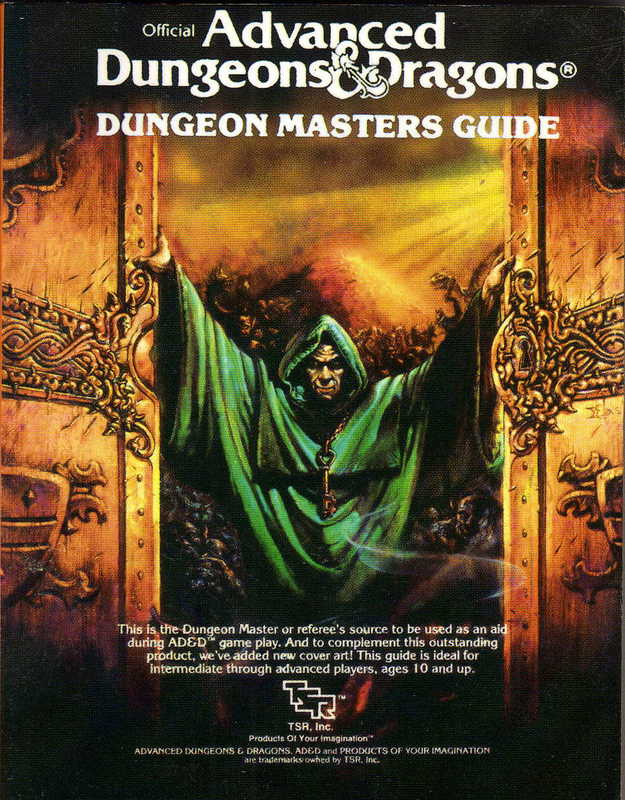
Then there's presentation ... Pathfinder books have the shiny.  No, they aren't classic and evocative Tramp-style art (or even weird Erol Otus stuff), rather the art in Pathfinder books borrow far more from the artistic sensibilities found in the promo art of MMORPGs, but then again, one reason that I went back to page through my AD&D DM's Guide time after time as a kid was the cool, mysterious Jeff Easley cover.


Pathfinder
The PROs

  • It's pretty (which can really get kids interested)
  • You can find books for it in my community via retail (if you know where to look)
  • A greater chance of meeting other people who play the same system
The CONs

  • It's expensive: $35 for a beginner's box; $50 for core rules hardback
  • It's dense.  The GM's book in the beginner box is 96 pages ... the player's book 64 ... I just don't know if my students are going to invest that level of time and concentration as a ticket-for-admission
  • It's crunchy (complex) which is a con when you are looking to get people in, but becomes a pro later on for those who stick with it.


So, if I really want to open a door to tabletop for my students, would I be best served if I left a copy of some Pathfinder core book lying around my classroom for kids to page through before class starts?

Wednesday, July 9, 2014

Big News for Gaming in School

Yesterday I found out that I've got tentative approval to teach a Strategy Games class during the regular 2014-2015 school year!  That means that the ball is now in my court to start putting together specific learning objectives, crafting lessons, and developing assessments to flesh out a full course proposal for final approval.

Think that through for a second ... 

"Here's your quiz class: You, a dwarf, an elf, and a wizard enter a 40' by 40' room containing three doors.  As your party begins searching the area, the middle door opens and a half-dozen pig-faced humanoids begin to enter.  Explain your strategy for surviving this encounter."

The grading rubric would take into account the student's use of cause and effect reasoning, the clarity of their step-by-step description, use of supporting details, etc.

I can't let my brain spin too far down that track yet, however, because my two-week Summer Enrichment class starts Monday!

Today I finalized the lineup of satellite games and the benefits that a victory in each break-out game will bring to our central scaffold game - Ghult: The Blood Coast.  Here's what that looks like:


Settlers of CatanCardPlace one pacified village and one base camp on the named island of your choice, discarding any other markers on that island.
Cadwallon: City of ThievesGoldEach player gains their final score in gold.
CitadelsCardExchange this card to enter Haut Port once without paying taxes.
Dagger for KidsGoldAdd recovered gold to the expedition of any surviving characters.
Red NovemberCardExperimental Sub: Your ship can occupy the same space as enemy ships without having to fight or run.
QwirkleGoldPlayers set the stakes. Winner takes all.
ChessCardExchange this card to roll two dice when your expedition fights or raids. Retain the higher roll.
StrategoCardExchange this card for an automatic result of six when your expedition fights.
Pyramid of HorusGoldEach player gains their final score in gold.
Robo RallyGoldPlayers set the stakes. Winner takes all.
Small WorldCardIt came from the jungle! On your turn exchange this card to have a horde of creatures emerge from the jungle and destroy the village or camp of your choice. An expedition in that space must retreat and is wounded. Any gold in the camp is lost.

I've been slapping paint on the minis for class too.  Here's where I'm at today: